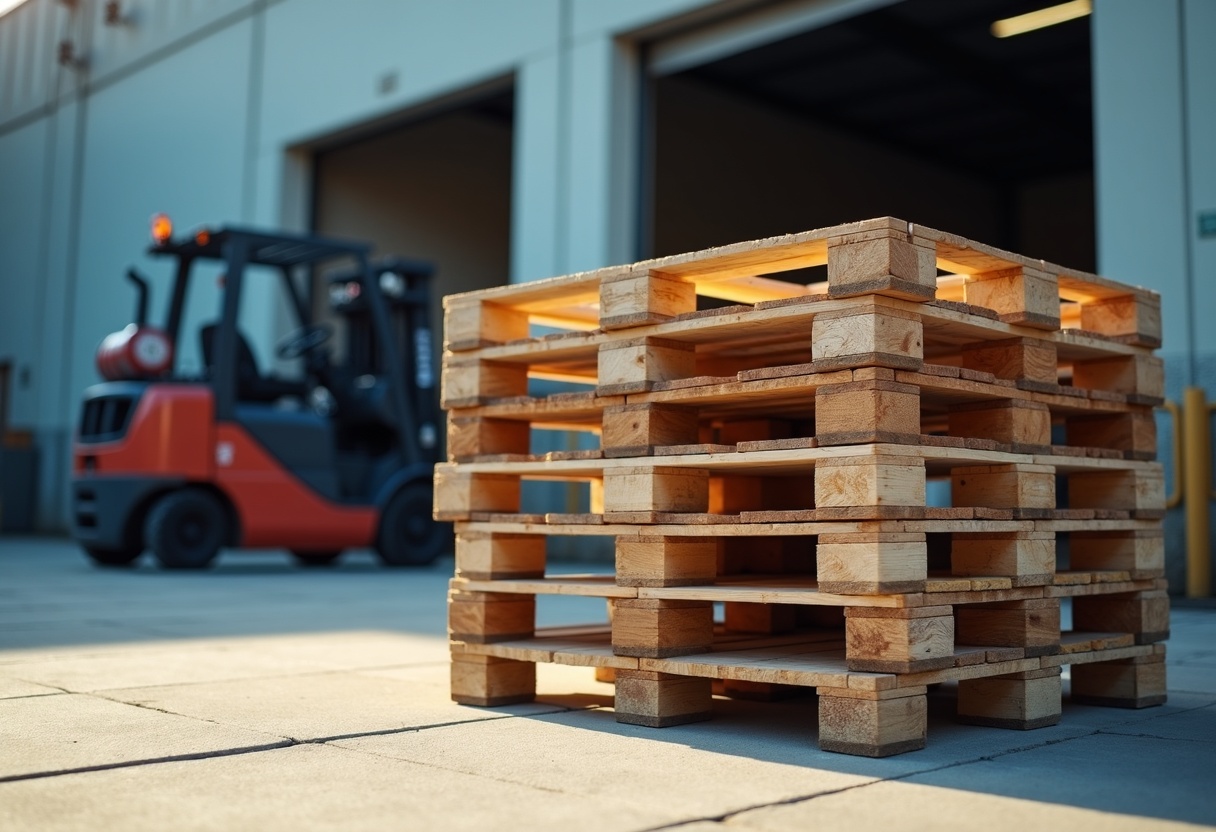
If your warehouse, job site, or back room has a growing pile of empty pallets taking up space, you are not alone. Every business that receives freight on pallets eventually faces the same question: where do I take these things?
The answer depends on what you have, how many, and what shape they are in. This guide covers the practical options for dropping off pallets in the Washington State area, what pallet companies actually want, and how to get the most value back instead of paying to throw them away.
Pallet Drop-Off Option 1: Sell to a Local Pallet Company
Your best option is almost always a local pallet company that buys back used pallets. This is what A-1 Pallets does for businesses across King County and the South Sound. When you have 48x40 GMA pallets in decent condition, a pallet supplier will often pay you for them — typically $1 to $4 per unit depending on grade and volume.
The process is straightforward. You call with your count and pallet type. The company either schedules a pickup (usually for larger quantities — 50+ pallets) or tells you to bring them to the yard. They inspect the load, grade the pallets, and cut you a check or apply credit toward future pallet purchases.
This is better than recycling or dumping for two reasons: you get paid, and the pallets go back into the supply chain instead of a landfill. If you are ordering replacement pallets, check out our guide to buying wood pallets — a buyback arrangement with your supplier can offset a good chunk of your pallet costs over the year.
Pallet Drop-Off Option 2: Wood Recycling Facilities
If your pallets are broken, cracked, or otherwise not reusable, a wood recycling facility is the next best stop. These operations grind pallets into landscape mulch, animal bedding, or biomass fuel. In the Kent and Tacoma area, several facilities accept pallets for a small fee or sometimes for free if the volume is high enough.
What matters here is material. Treated pallets (marked with HT for heat-treated or MB for methyl bromide) are accepted by most recyclers, but painted or chemically coated pallets may be turned away. If you are not sure what you have, check the stamps on the pallet stringers — our pallet weight and dimensions guide explains what the markings mean.
Call ahead. Recycling facilities have varying acceptance rules, minimum quantities, and tipping fees. Some require pallets to be separated from other wood waste. Others accept mixed loads. A five-minute phone call saves a wasted trip.
Pallet Drop-Off Option 3: Give Them Away
If you have a small quantity — say, 5 to 20 pallets — and do not want to deal with minimum pickup requirements, giving them away is a viable option. Builders, gardeners, DIY woodworkers, and small craft businesses regularly look for free pallets on Craigslist, Facebook Marketplace, and local community boards.
List the pallet size, condition, and quantity. Be honest about broken boards or missing stringers. Most people who respond will pick them up themselves. This option costs you nothing and clears the space, but it does not pay — and if the pallets sit for a week without takers, you are back to square one.
What Pallet Companies Actually Want
Not every pallet is worth picking up. Here is what a pallet company like ours looks at when evaluating a drop-off or buyback:
Size. The 48x40 GMA pallet is the gold standard. It is the most common size in US supply chains and the easiest to resell. Other sizes — 42x42, 36x36, 48x48 — are accepted but valued lower because demand is thinner. If you are choosing a pallet company in Washington, ask which sizes they handle before you commit.
Condition. Pallets are graded A, B, or C. Grade A pallets are clean, unbroken, and ready to go back into service. Grade B pallets have minor damage — a cracked board or a broken stringer — but are repairable. Grade C pallets are landfill or recycling material. You get paid for A and B; C goes to the grinder.
Quantity. A pallet company will pick up 100 pallets from your lot. Five pallets are usually not worth the truck run unless you are an existing customer. If you have a small quantity, delivering them yourself is the move.
Consistency. If you generate pallets regularly — a distribution center, a retail back room, a manufacturing facility — a standing buyback arrangement with a pallet supplier is worth setting up. We pick up on a schedule, you get a predictable credit, and the pallets never pile up.
Common Mistakes When Dropping Off Pallets
Waiting too long. Pallets left outside through a Washington winter absorb moisture, rot faster, and drop in grade. A pallet that would have been Grade A in October is Grade C by March. Move them while they are dry and intact.
Mixing sizes. If you show up with a mixed load of 48x40s, 42x42s, and odd custom sizes, expect the pallet company to sort through them and price each category separately. Save time by separating them before delivery.
Assuming all pallets are worthless. A lot of businesses throw away pallets they could be getting paid for. Even used 48x40s in rough shape have value to a pallet company that repairs and resells them. Before you load up the dumpster, make a call.
A-1 Pallets Drop-Off and Buyback in Washington State
A-1 Pallets has been buying, selling, and recycling pallets in the Pacific Northwest for decades. If you have pallets piling up at your facility in Kent, Seattle, Tacoma, Auburn, or anywhere in the South Sound region, contact us with your pallet count and type. We will tell you whether they are worth picking up, what we can pay, and whether we can schedule a pickup or direct you to our yard for drop-off.
The worst outcome is letting good pallets rot behind your building. The best outcome is getting paid to clear the space and keep the pallets in circulation. Call us and find out which one you are sitting on.